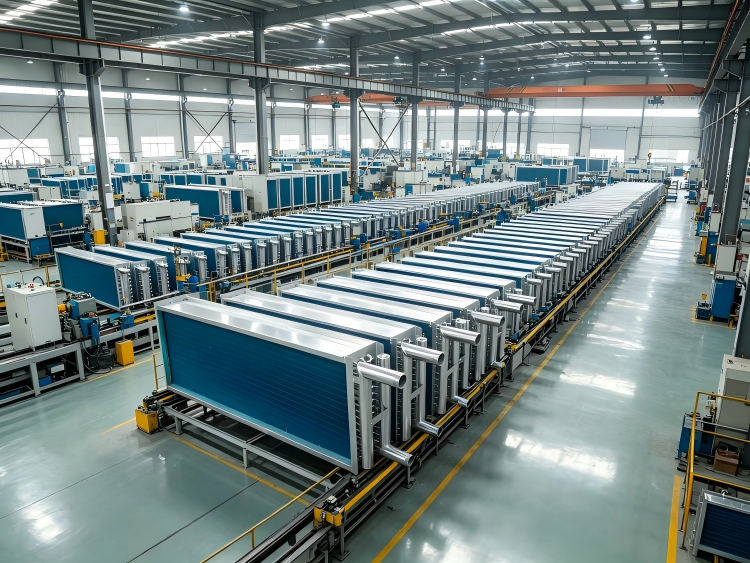
Coastal sites, chemical plants and pharmaceutical clean rooms all reach the same decision point: aluminium fins or stainless steel? One is cheap and transfers heat well but corrodes; the other resists corrosion but costs capacity and money.
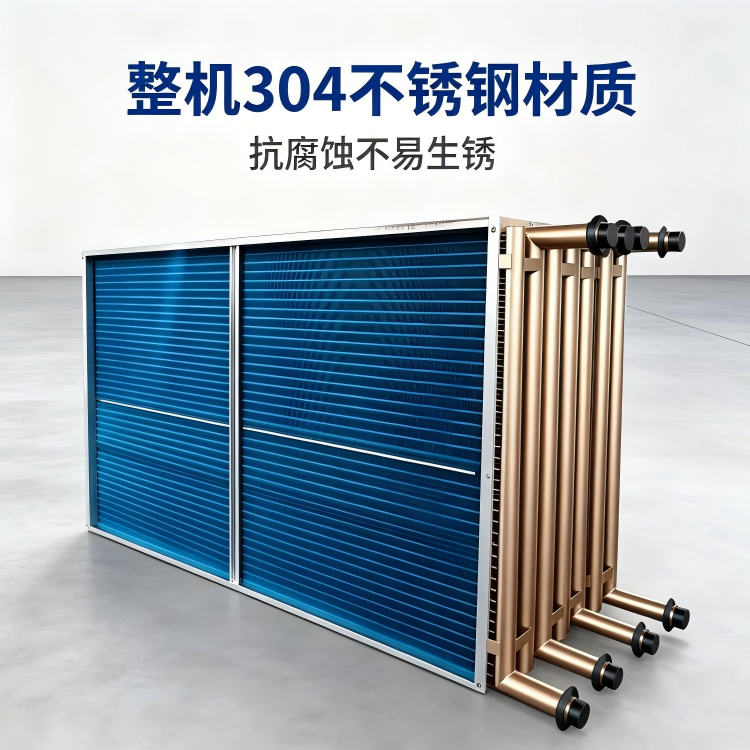
A cooling coil is copper tube with fins pressed onto it. Air passes between the fins and exchanges heat through the fin surface and the tube wall. Fins exist because bare tube cannot present enough surface area to the air — remove the fin performance and the coil grows or the duty falls.
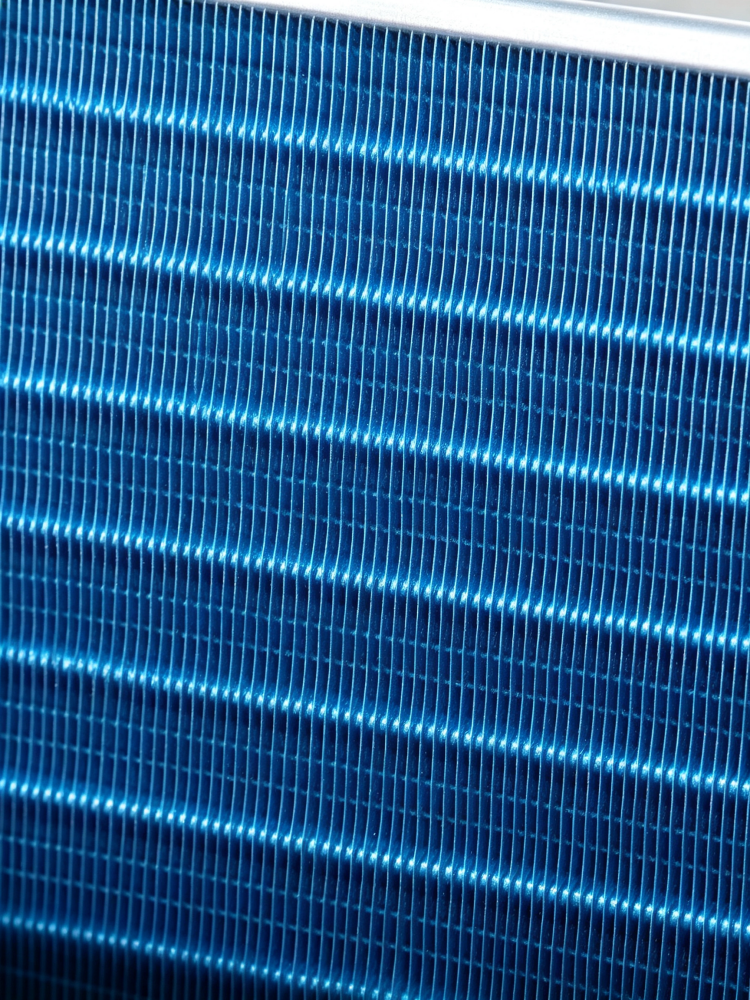
Aluminium has high thermal conductivity and low cost, and it is easy to form into dense, enhanced fin patterns. A hydrophilic coating improves condensate drainage and slows the first stage of corrosion. It is the correct choice for ordinary air-conditioned space, and the wrong one for salt spray or acid gas, where pitting begins within a couple of seasons.
Stainless fins resist chlorides and most acids and hold their thickness far longer in a plating shop or a coastal plant. The trade-offs are lower conductivity — so more surface or more rows for the same duty — higher material and fabrication cost, and greater weight on the casing.
Office, hotel, retail: aluminium, hydrophilic coated where condensate is heavy. Coastal within a few kilometres of the sea, or a room with salt in the air: coated aluminium at minimum, stainless if the coil is expected to last a decade. Chemical, plating or dyeing with acid or bleach vapour: stainless steel fins with a thicker tube wall, and a maintenance schedule that actually gets followed.
Tell us what the air contains — salt, acid, solvent, bleach, dust — and the expected service life, and we will quote two configurations with the duty, the pressure drop and the price difference so the decision can be made on numbers.