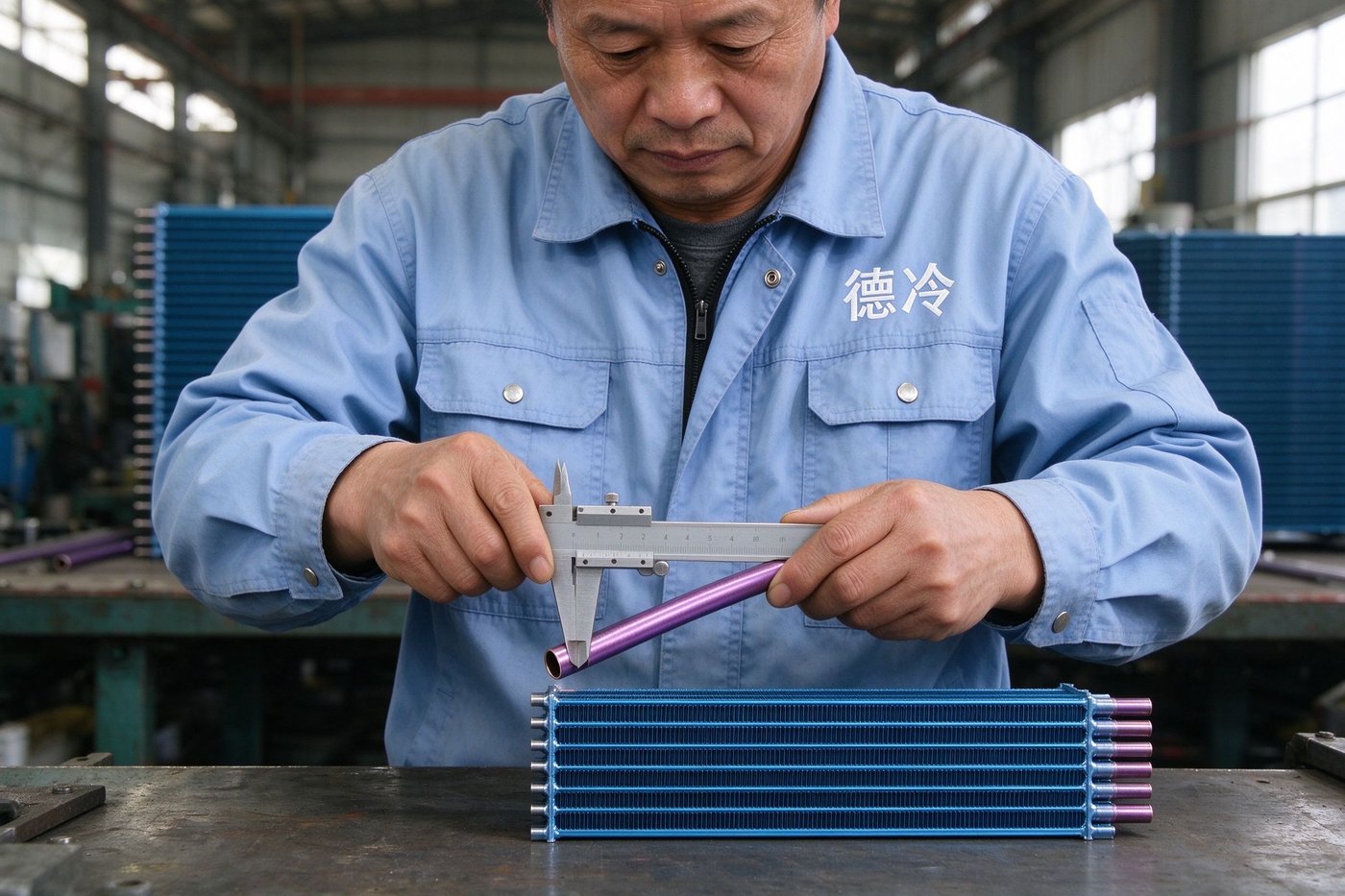
Two cooling coils can use identical copper tube, identical aluminium fin and identical face area and still transfer noticeably different amounts of heat. The difference is almost always the joint between tube and fin.
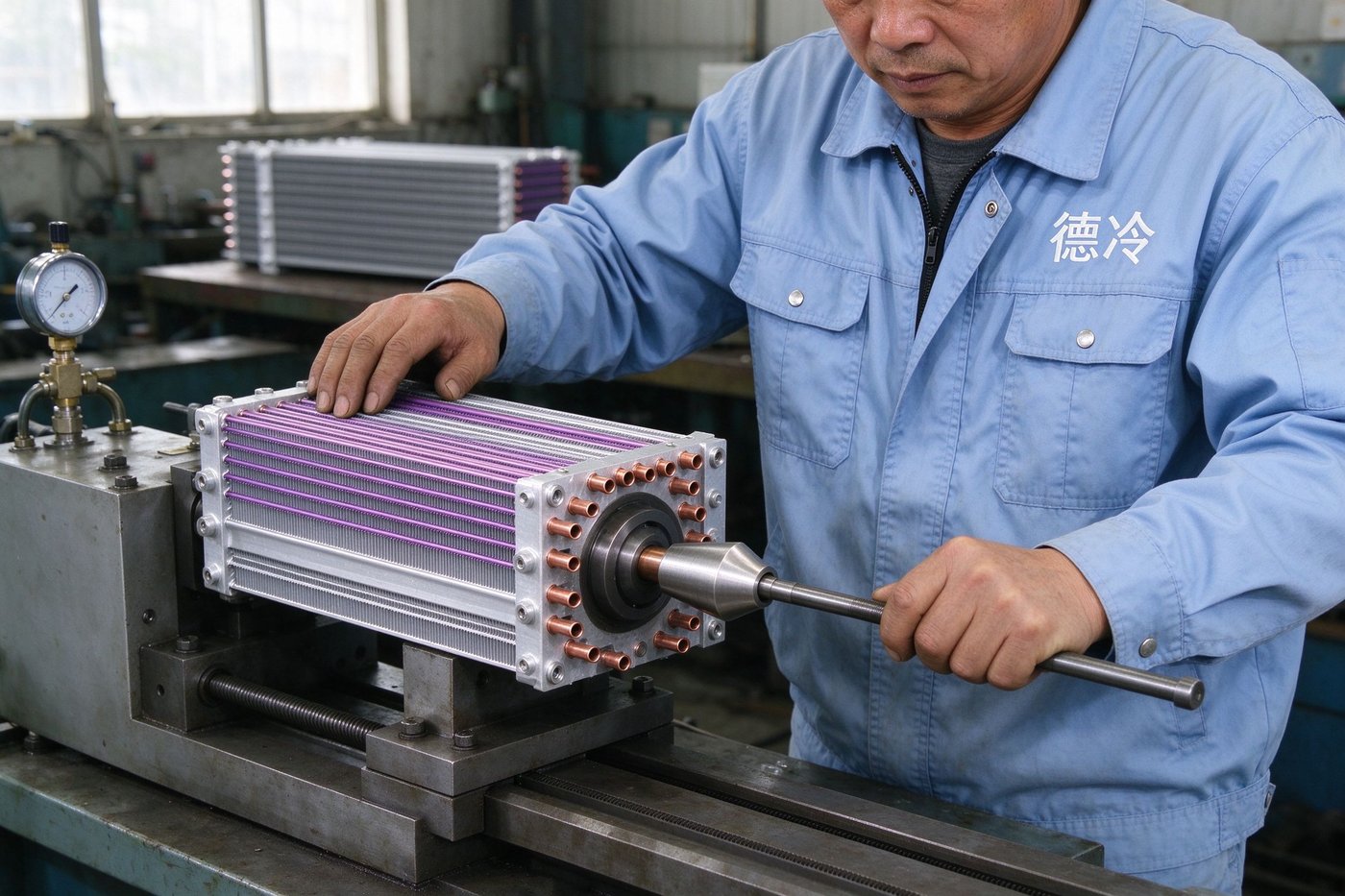
Fins are stacked on tubes with a collar slightly larger than the tube. A hardened steel ball or mandrel is drawn through each tube, expanding it plastically until the collar is gripped by the tube wall. Done correctly, tube and fin become one thermal path. Done loosely, every collar is an air gap — and air is a very good insulator.
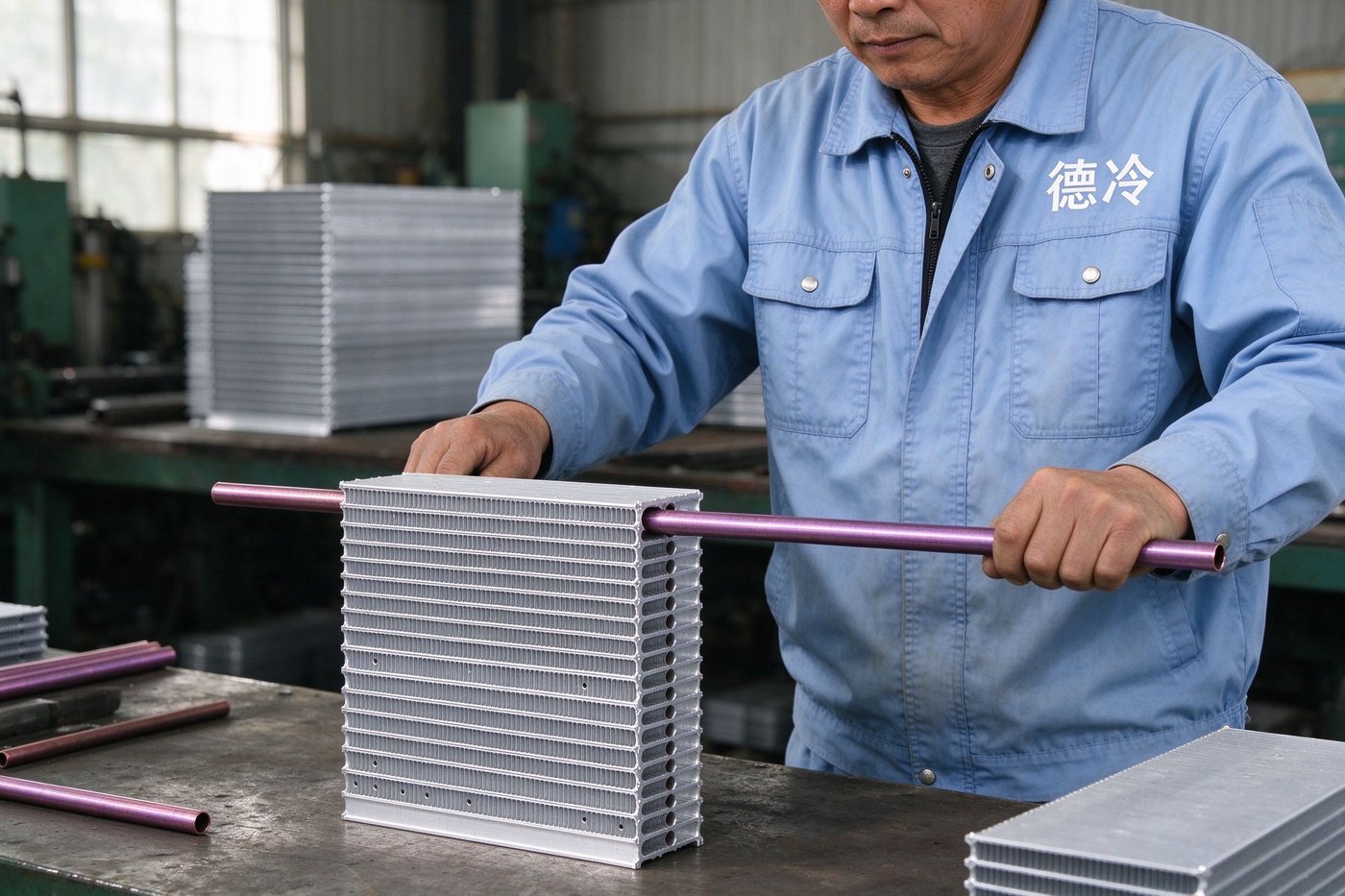
Expansion has to be even along the whole tube length and consistent across the coil: too little and the collar stays loose, too much and the tube wall thins or splits at the bend radius. Coils with long circuits, thick fin stacks or small bend radii show a rushed expansion first, as a capacity shortfall in the first heating or cooling season.
Tube ends are cut square, headers are fitted and the coil is brazed under nitrogen. The finished coil is pressure-tested, because a leak at a brazed joint is cheaper to find in our workshop than behind a ceiling.
When comparing coil quotations, ask for tube wall thickness, fin pitch and test pressure — those three numbers explain most of the price difference between suppliers.