Paper mills, dyeing plants and electroplating shops ask the same two questions: how long will a standard coil last in this air, and do we really need the anti-corrosion treatment? Both have a straight answer.
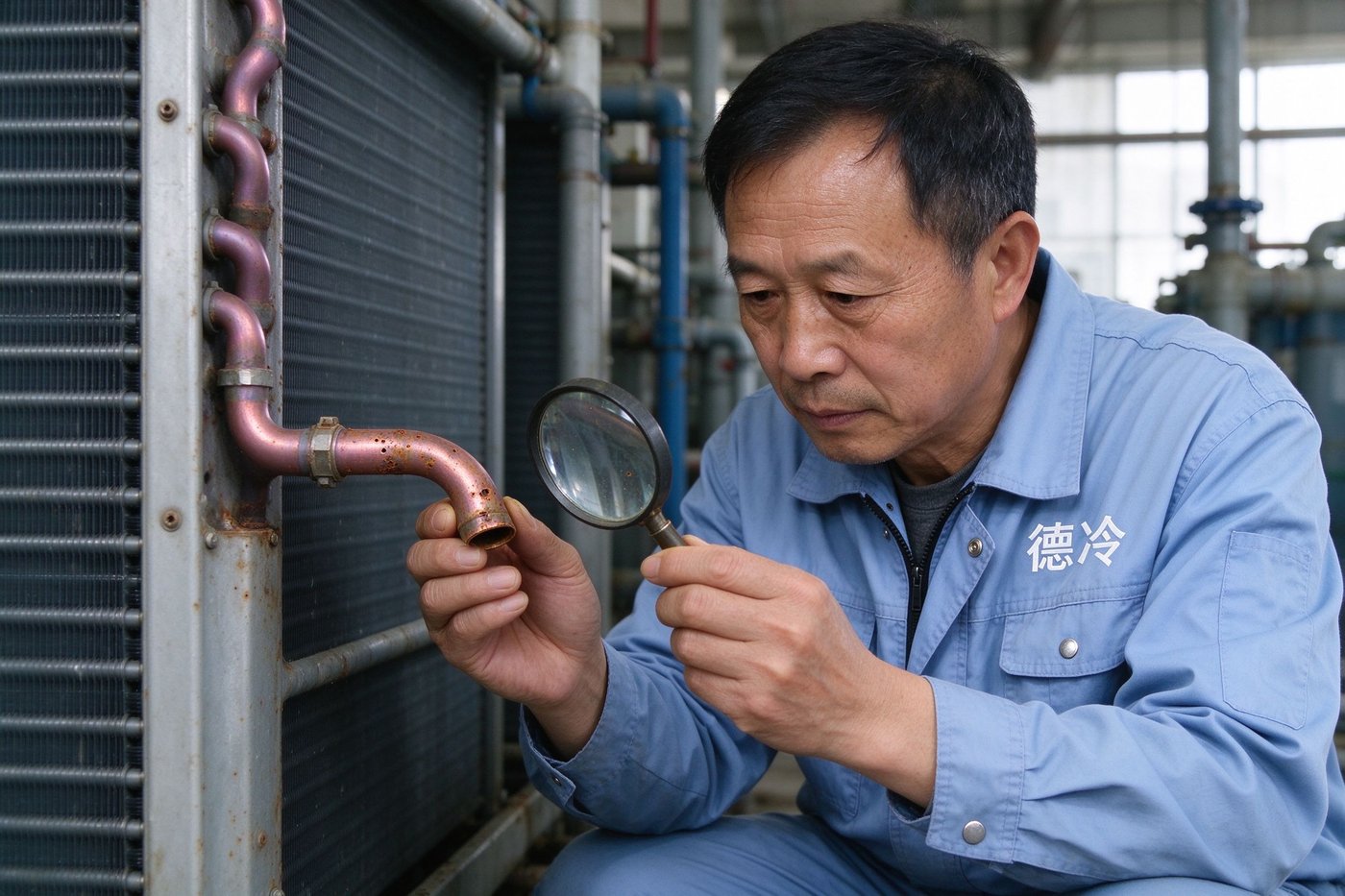
A cooling coil is copper tube with aluminium fins. Two different metals, in contact, in an environment where the fin surface first collects condensate. That water film is an electrolyte. Add chloride from sea air, bleach vapour from a dye house or acid mist from a plating line, and the aluminium-to-copper junction starts behaving like a battery. The fins pit first, then the tube wall follows.
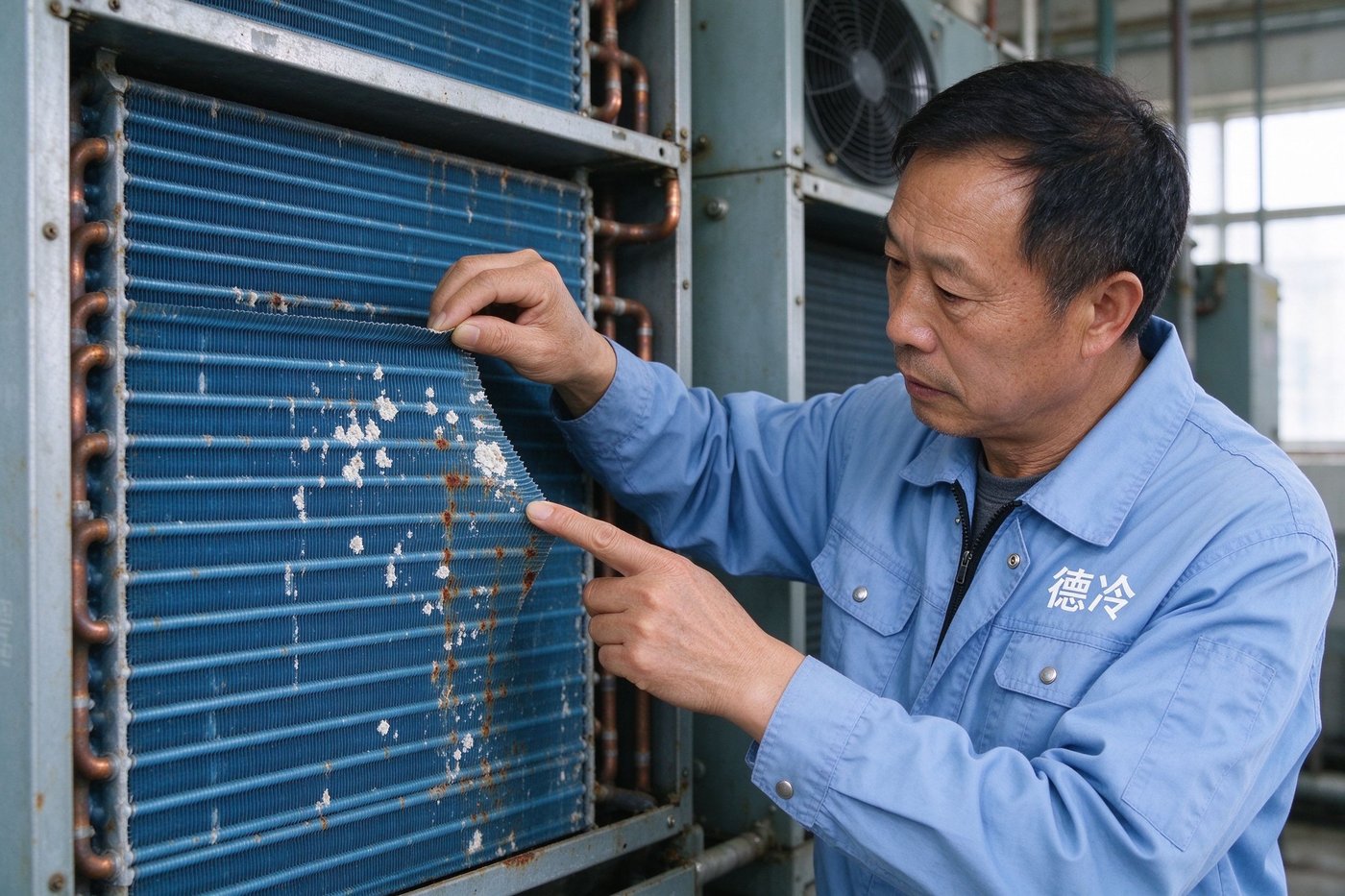
The damage shows up in three stages: fin material disappears and the coil loses surface area, so capacity drops; pinholes appear in the tube, and the coil starts to leak water into the air stream; finally the coil is unrecoverable and has to be replaced, usually mid-season.
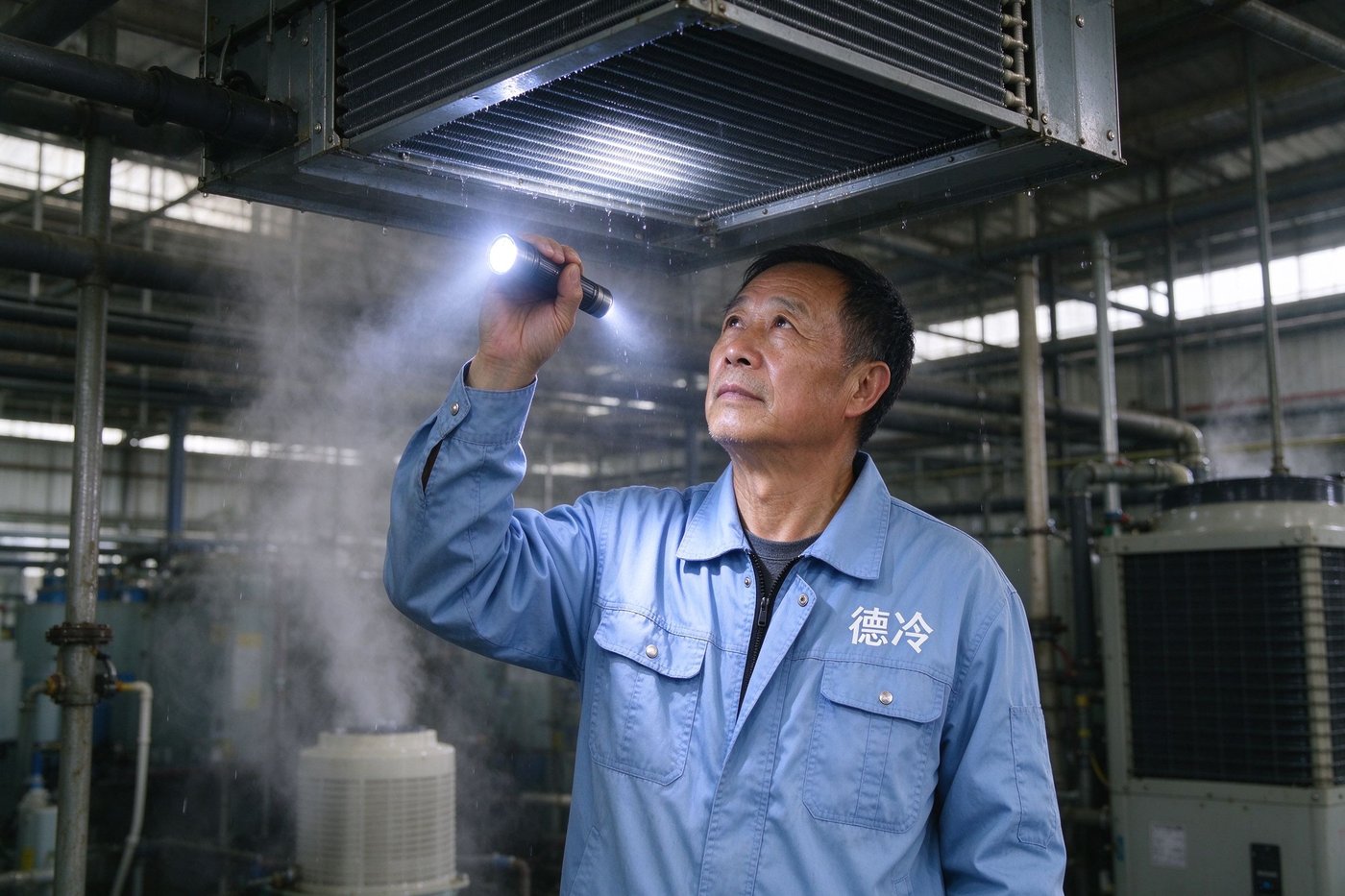
Look at the fin edge with a light behind it. A coil that has lost most of its fin thickness shows visible light gaps and a chalky white deposit. Check the air side for water carried over, and compare the entering/leaving water temperature difference with the original commissioning figures — a widening difference at the same flow means the coil is no longer transferring what it should.
If the room is air-conditioned office space, standard aluminium fins are the right answer and the extra cost buys nothing. If the air carries salt, acid or bleach, specify the treatment: hydrophilic coating on aluminium, or stainless steel fins where the corrosion is severe. On the tube side, thicker wall or copper-nickel tube where the water itself is aggressive.
A coated coil that is never washed still fails. Rinse the fins on the maintenance interval, keep the drain pan clean, and make sure the air filter ahead of the coil is actually doing its job — most of the corrosive dust reaching a coil arrives with unfiltered air.
Send us the air composition and the room conditions and we will quote a coil with the right fin material and coating for that environment, not the most expensive option by default.