Water on a ceiling is almost never a manufacturing fault. In our experience it comes from one of five installation issues, and four of them can be fixed before the ceiling is closed.
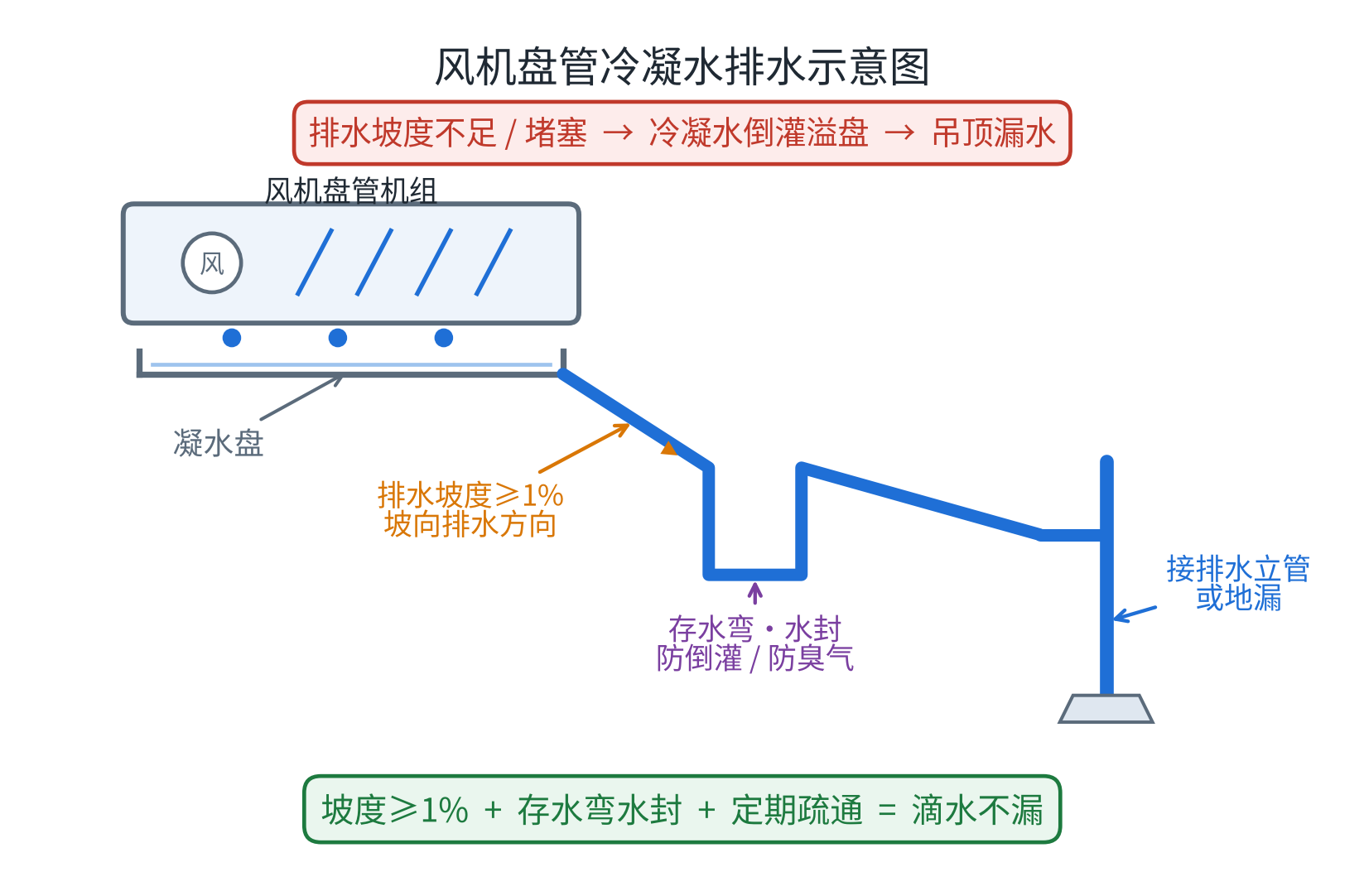
The drain pan is sloped, but the drain pipe often is not. A horizontal run, a sag between hangers or a missing trap lets water stand in the pan and eventually overflow. Keep a continuous fall of at least one percent and fit a trap where the unit runs at negative static pressure.
Condensation forms on the coldest surface — usually the valve body or the union the insulation does not cover. Joints should be vapour-sealed, not just wrapped, and the valve and strainer should be insulated as carefully as the pipe.
An air pocket reduces flow, reduces capacity and can cause the coil to freeze in winter. Fill from the lowest point, vent at the highest, and fit an automatic air vent at the coil’s high point if the circuit layout allows air to collect.
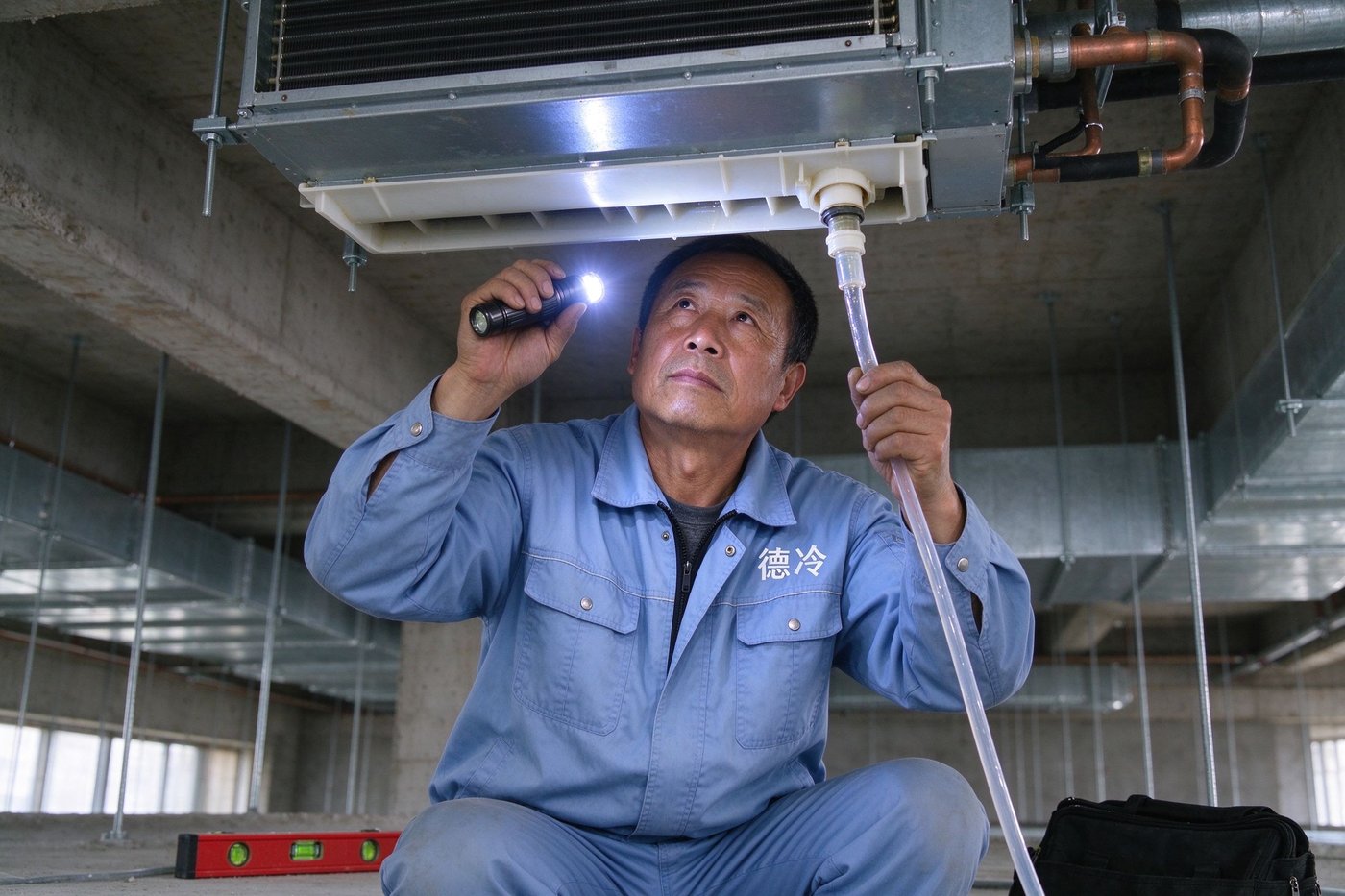
Units are frequently lifted by the coil connections or dropped off a cart. A bent connection stub or a punctured tube will leak only under pressure. Lift the casing, never the pipework, and pressure-test the unit again after any impact.
Construction dust and insulation offcuts end up in the pan. Flush the pan and hose before commissioning, and check the drain again after ceiling works are finished — debris falls in afterwards more often than during.
If a unit is already leaking, send us the model, the location of the water and a photo of the connection area; we can usually identify the cause from that alone.