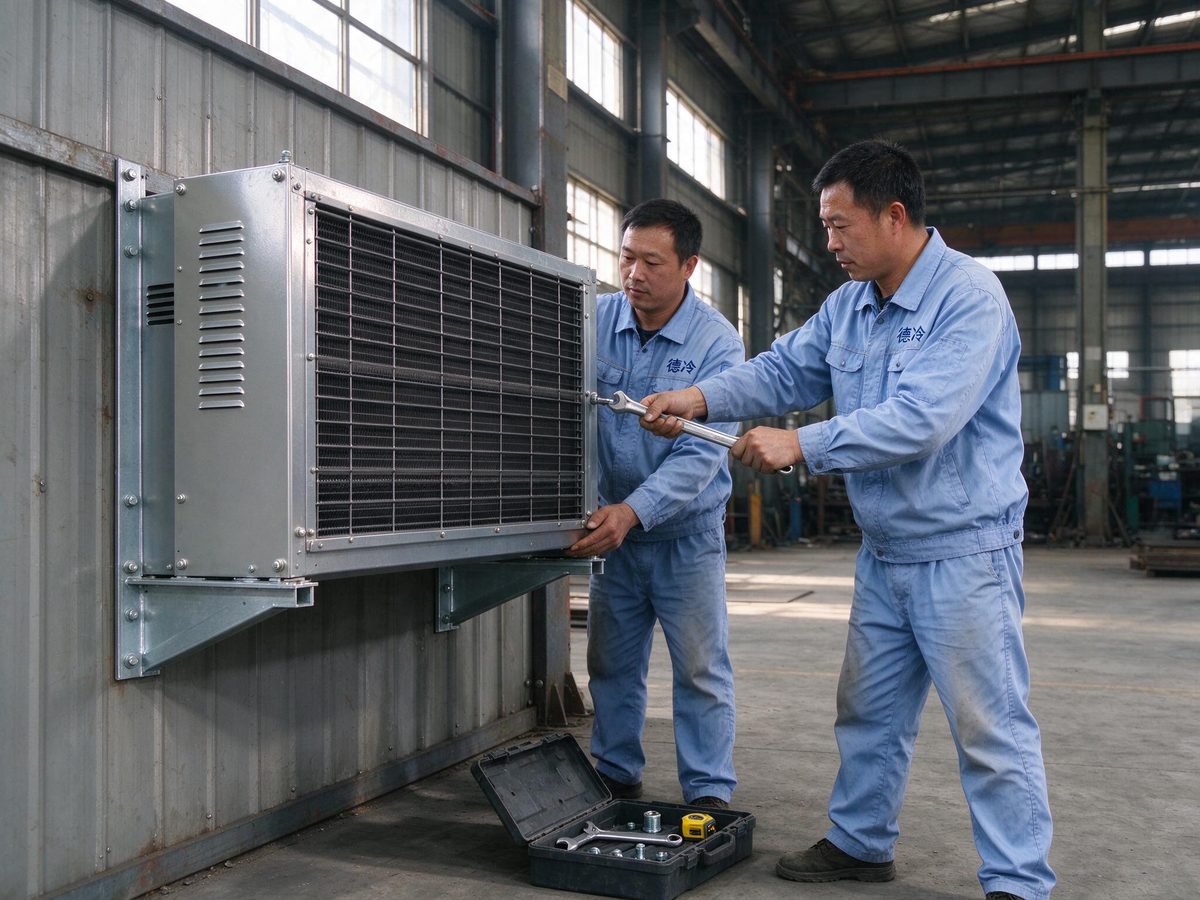
An industrial warm-air heater is a simple machine until something goes wrong on site — then it is the machine that stopped a production line in winter. Our rule is that every unit is run before it is packed, not sampled.
Each heater is started at rated voltage and run until the outlet air temperature stabilises. We record the temperature rise across the coil and compare it with the calculated value for that model. A unit that cannot reach its rated rise is stripped and checked — usually a coil circuit that was not fully bled, or a fan running the wrong direction.
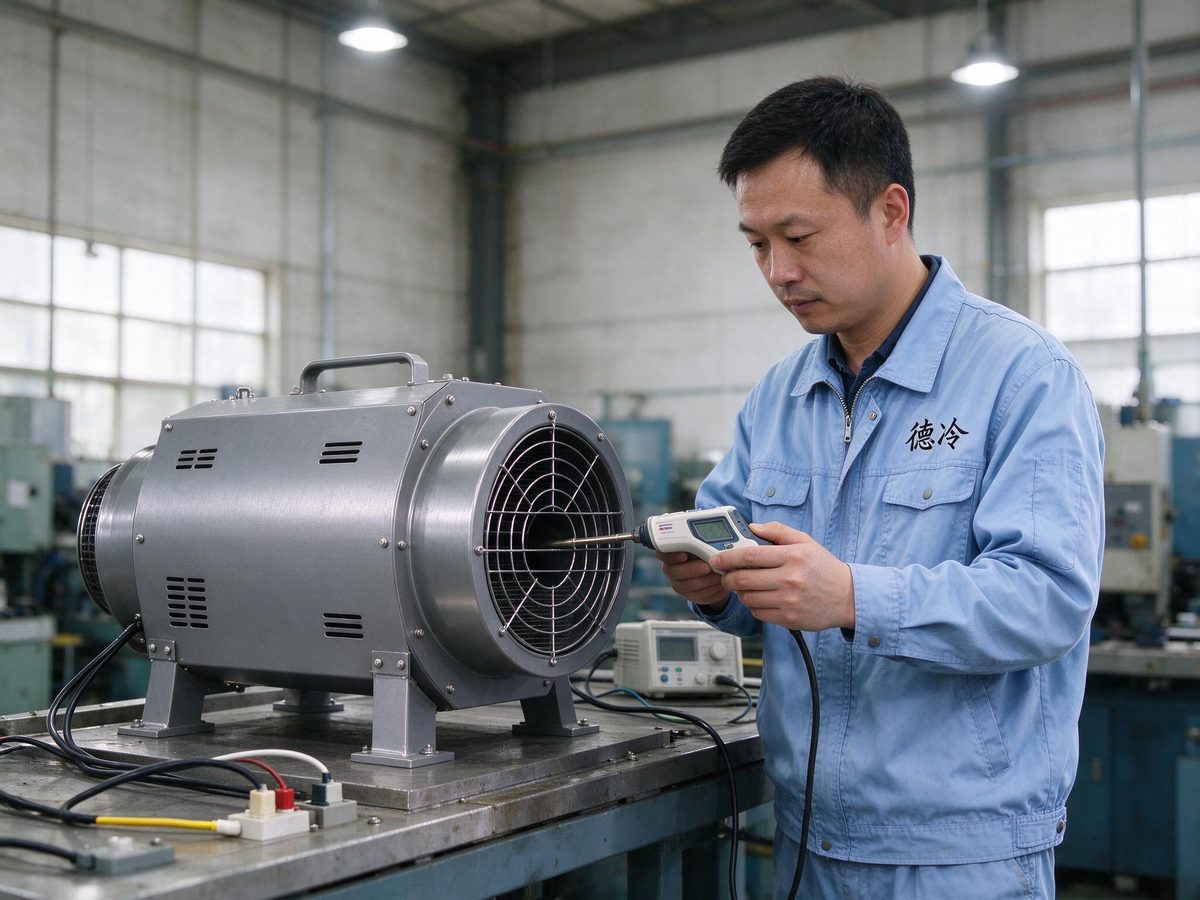
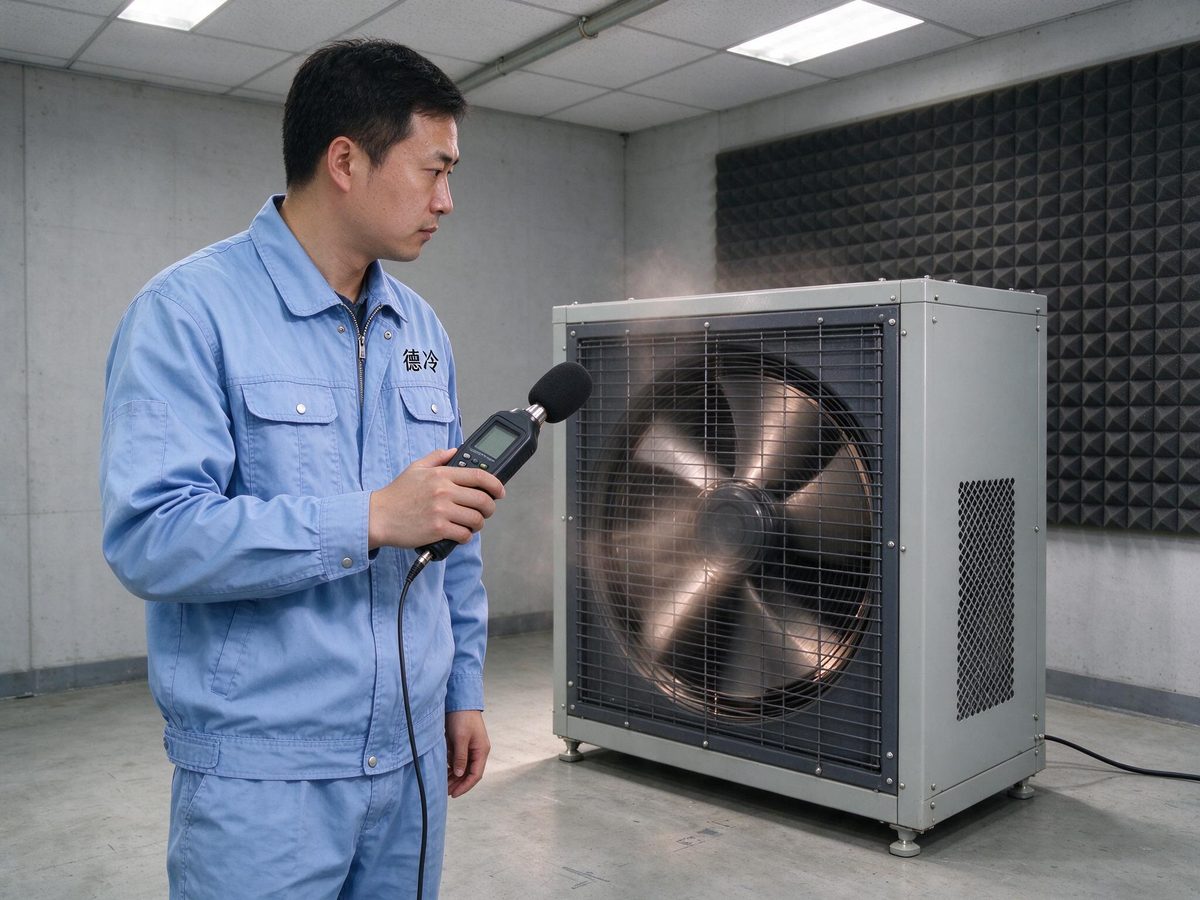
Fan and motor are checked at all three speeds with a sound level meter at one metre. Bearing noise, casing resonance or a fan rubbing its housing is caught here rather than by the customer. Vibration at the mounting points is checked too, because warm-air heaters are often hung from lightweight structure.
Insulation resistance, earth continuity and current draw are measured on every unit. The thermostat, remote switch or speed controller is wired and function-tested in the same run, so the customer receives a heater that starts, steps through its speeds and stops as wired.
Results are recorded against the unit serial number. If a heater behaves differently on site from the day it was dispatched, we look up what it did in the workshop instead of guessing.