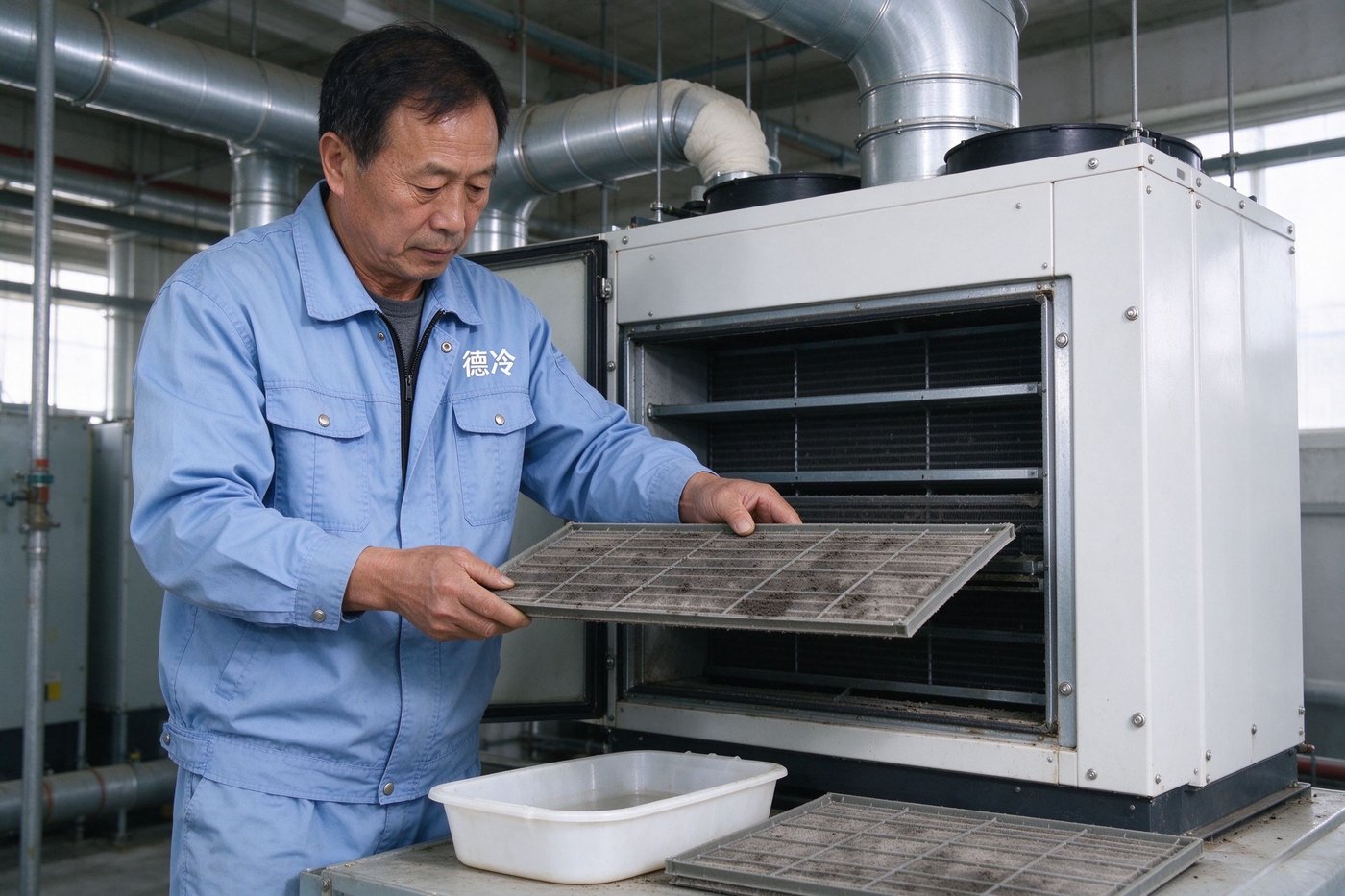
Two or three years after installation the complaint is always the same: airflow has dropped, the rooms feel stuffy, the machine must be broken. Eight calls out of ten it is the filter, not the machine.
The primary filter is the only thing standing between the dust outside and the core inside. As it loads up, resistance rises, and the actual fresh-air volume drops below design. Carbon dioxide and odour build up in the room and the space feels worse the longer the unit runs.
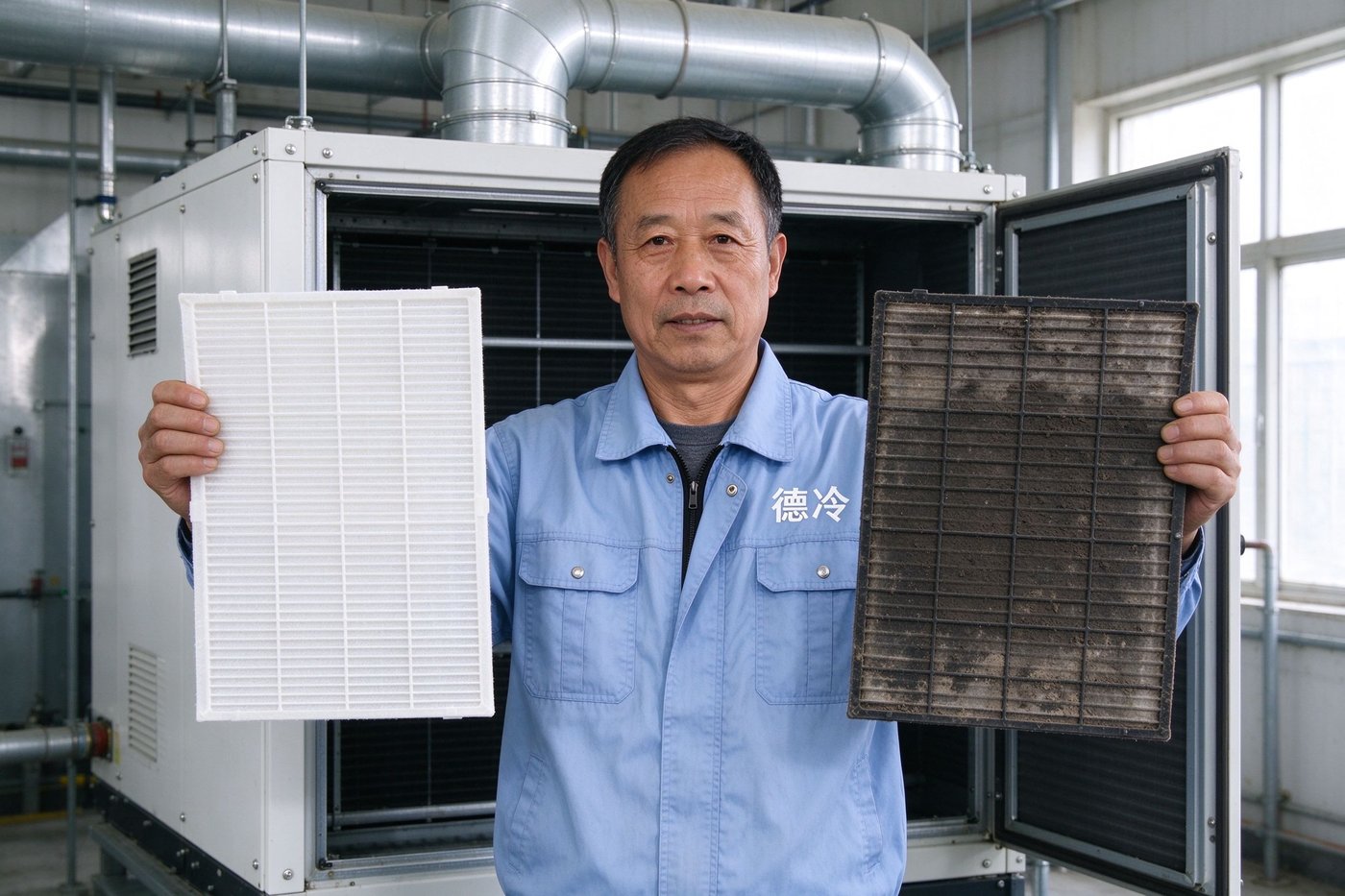
Dust that passes the loaded filter deposits on the core surfaces. The channels narrow, the transfer efficiency drops, and the pressure drop rises — so the fan uses more energy to deliver less fresh air.
A saturated filter is warm and damp for much of the year. Bacteria and mould grow in it and are then carried into the supply air. At that point the ventilator is doing the opposite of what it was installed for.
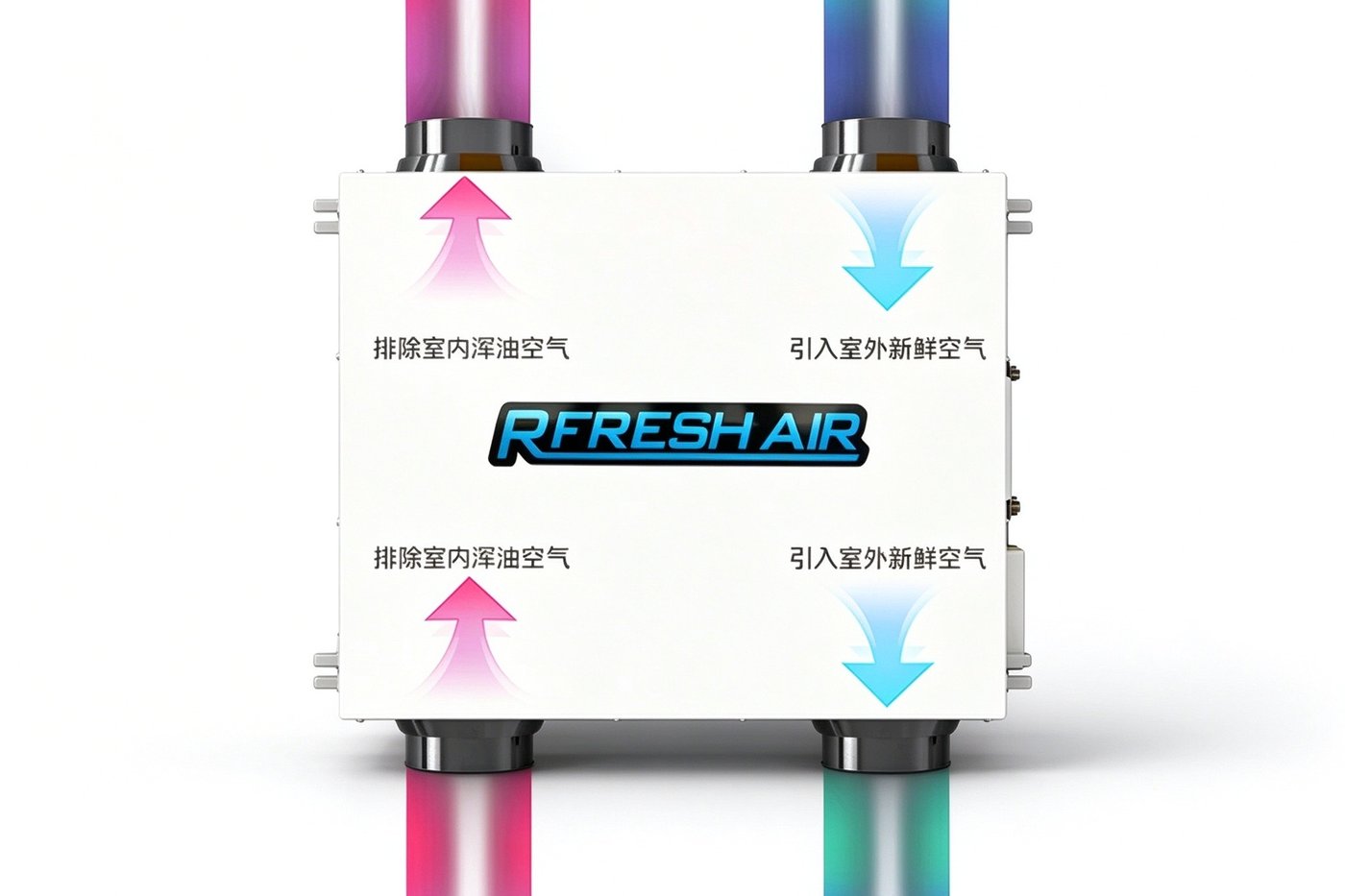
Higher resistance means the motor runs further up its curve continuously: noise increases, the motor runs hotter, bearing life shortens. Condensate can also collect inside the unit where the airflow no longer sweeps the surfaces dry.
In a normal urban environment, clean the primary filter every one to three months and replace it when it can no longer be cleaned back to a reasonable resistance. Wash with water from the clean side, dry it fully before refitting, and never run the unit with the filter removed. Keep a spare set on site — the cost of a filter is nothing next to a season of reduced airflow.