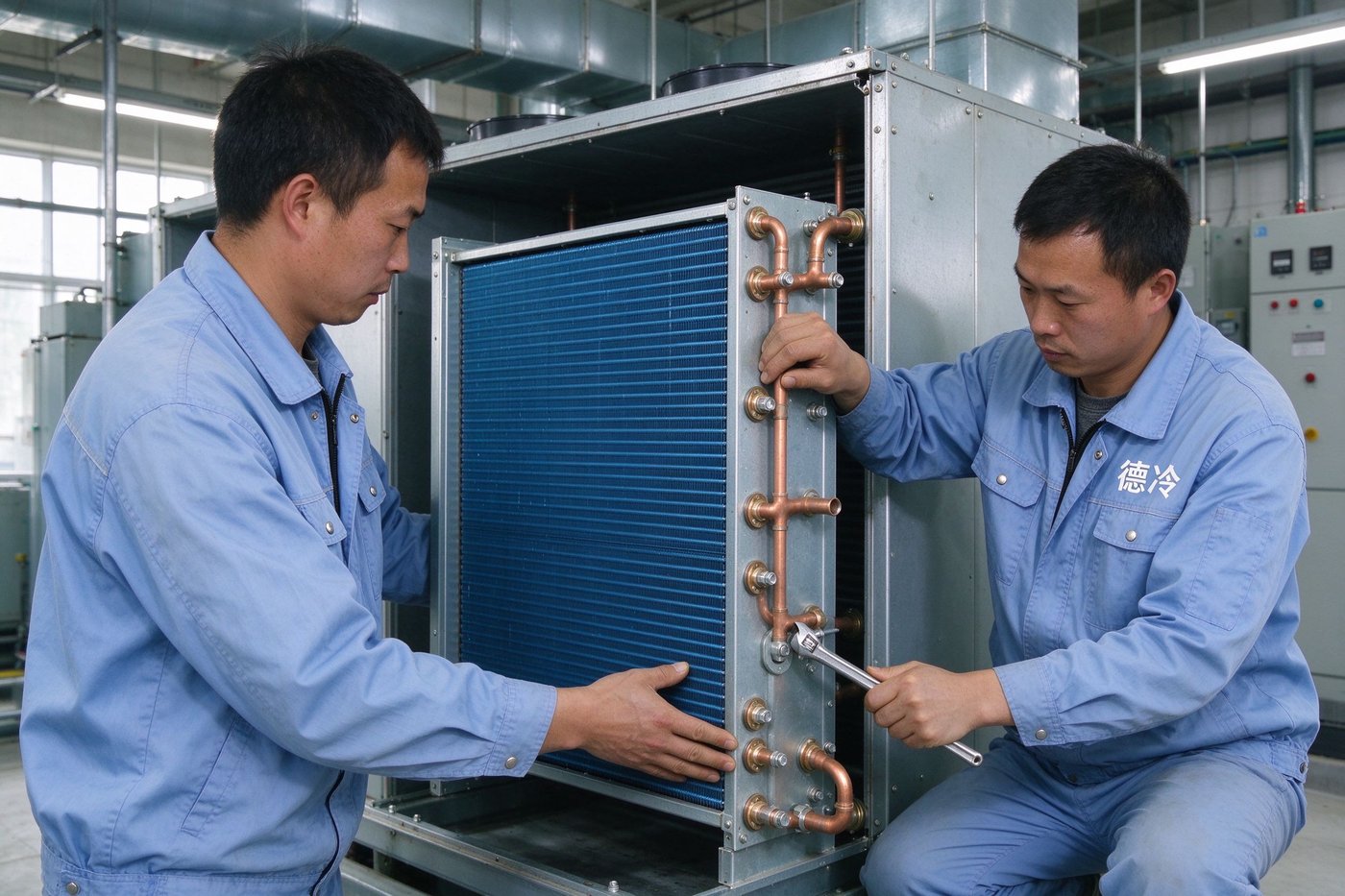
A frozen coil is one of the more expensive failures in an air handling system: the tube can split, and the repair usually means removing the coil from the unit. Frost appears for a small number of reasons, and all of them can be designed out.
Below roughly 5 °C chilled water temperature, the fin surface can drop under 0 °C. If airflow across the coil is also low — a dirty filter, a closed damper, a fan running below design — the surface gets colder still. That combination is the classic freeze condition.
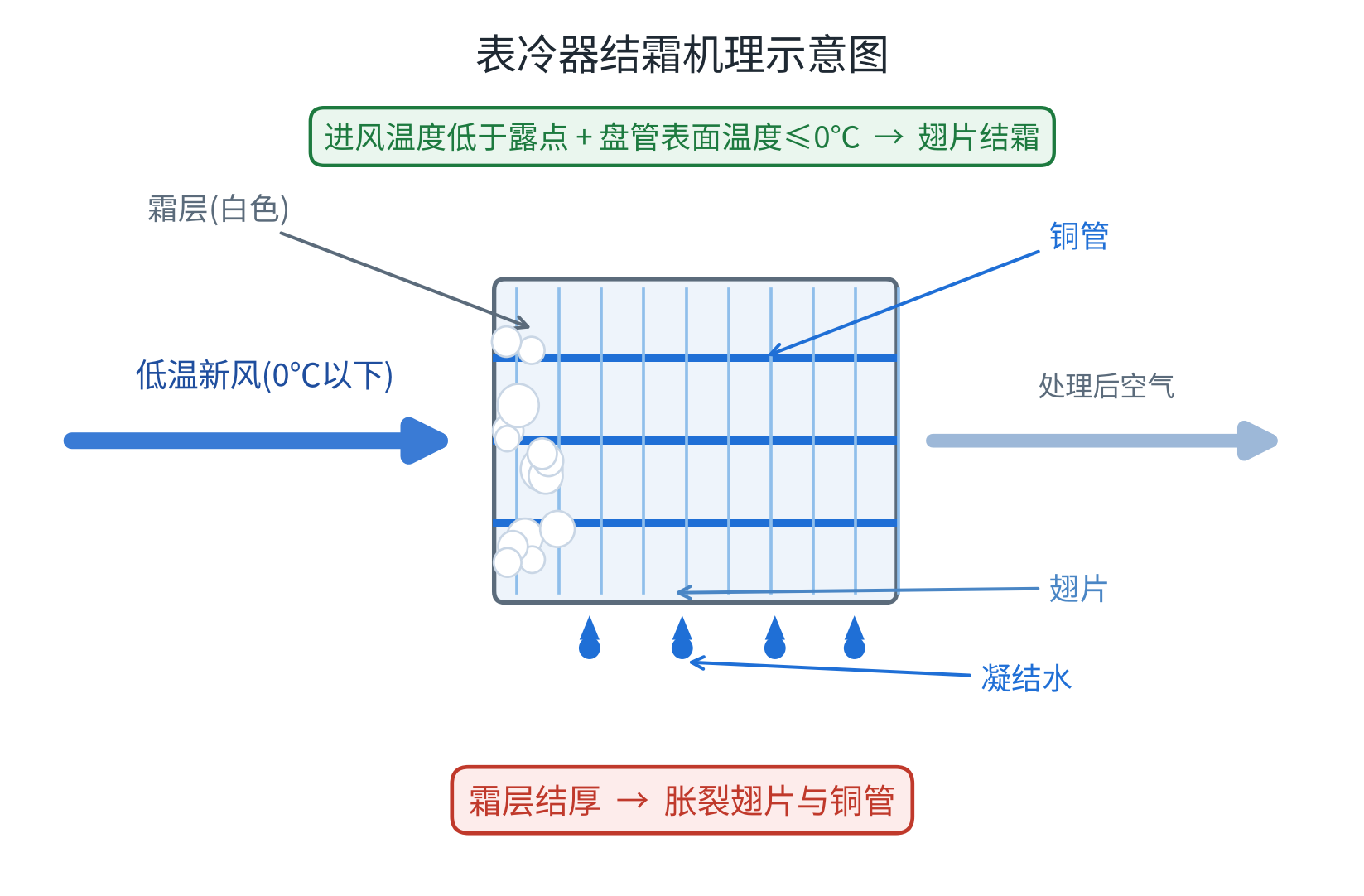
Partially blocked filters, a duct elbow too close to the coil or a unit installed against a wall produce a cold patch on one part of the face while the rest of the coil runs normally. The cold patch frosts first and blocks the remaining free area, which accelerates the freeze.
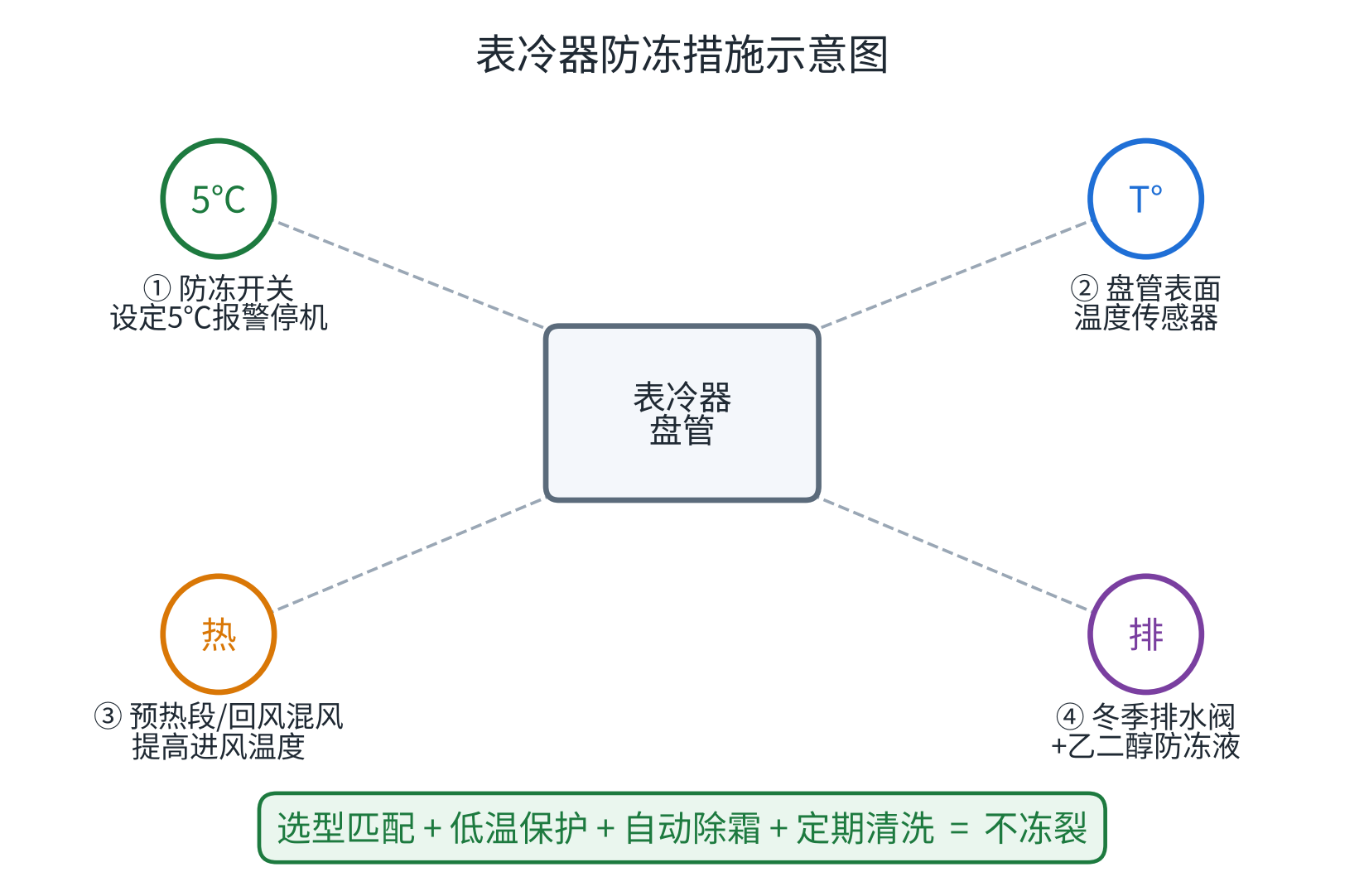
A freeze thermostat on the leaving-air side, a low-limit switch on the water side and a differential pressure switch across the filter are what actually protect the coil. Set them to alarm before the coil is damaged, not after.
Isolate the water, keep the fan off, and thaw with ambient air or a gentle warm water flow — never with an open flame or steam lance. Then pressure-test the coil before restarting: a split tube that has been thawed will leak the first time the circuit is filled.
For cold-climate projects we recommend glycol on the water side, a drain pan heater and a freeze stat wired to stop the fan. Send us the design conditions and we will quote the coil with those options.