In one line: a fresh-air project quotation must be split into three accounts — unit, materials, installation. On the unit the difference sits in external static pressure, heat recovery type and filter class; on materials in the three ways of measuring (duct by the metre, components by the piece, controls by the point); on installation in how labour is counted, whether commissioning is done and whether documents are issued. Roll the three into one lump sum and price comparison is meaningless.
Three points to judge by:
Model and airflow are not enough on a unit line; if external static pressure is short, the air never reaches the terminal rooms.
Packing materials at 30 percent of the unit price is the main source of later top-up orders and variations.
Writing “components as per list, commissioning to include an airflow balance record” into the contract beats arguing the unit price down.
Last week a client on an office refurbishment laid two fresh-air quotations on my desk. Unit prices almost identical, totals RMB 12,000 apart. He asked whether the dearer supplier was simply taking more.
I did not answer directly; I took the two sheets apart. Unit difference: RMB 200. Materials: RMB 4,300. Installation: RMB 7,500. The difference was not in the machines but in the two vaguely written pages.
For fresh-air work I always recommend three accounts: unit, materials, installation. Mixed into one lump sum, nobody can say where the money went, and by the time the final account arrives the missing items are too late.
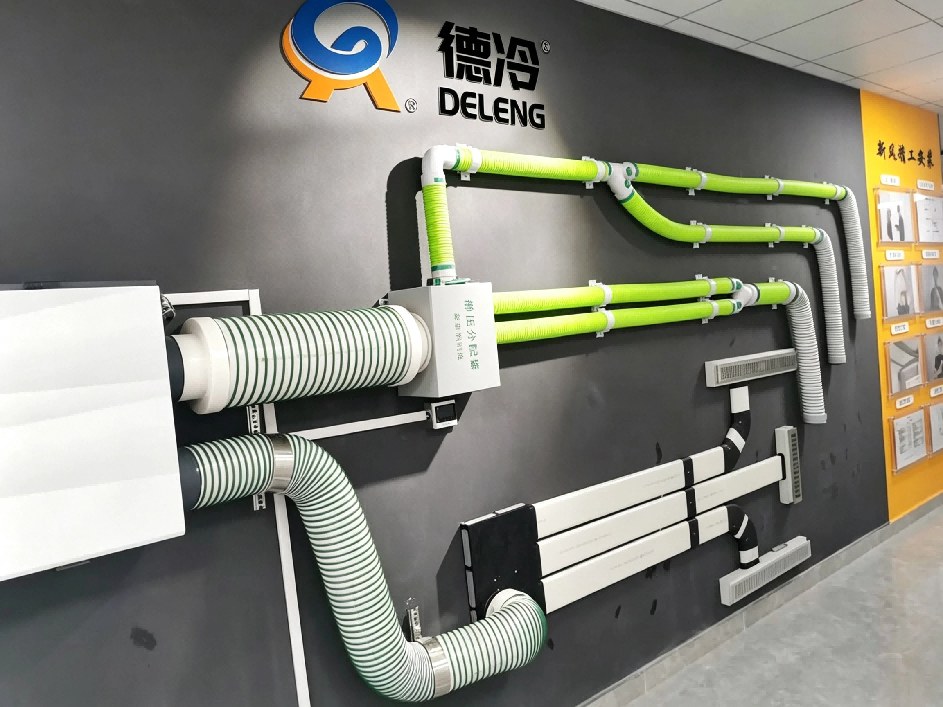
Fresh-air installation: unit, silencer plenum, ducting and terminal outlets in one run
A unit line usually carries two things only: model and airflow. That is not enough. Two units both rated 2,000 m³/h with 80 Pa and 150 Pa external static pressure are different products — long duct runs, many bends and a high-efficiency filter at the terminal will not be served by the lower figure.
Then four more: sensible or total heat recovery; filters to primary plus medium, or with H11; AC or brushless DC motor; and whether the access panel and filter slide-out are actually convenient. The last one is most often ignored, and the day a filter has to be changed by dismantling the ceiling it costs more than the difference in unit price.
Our total heat exchange ventilators run from XH-D800 to XH-D6000, ten models, with static pressure and filter configuration written into the quotation alongside airflow so the project can check them. Parameters are listed one by one on the total heat exchange fresh-air ventilator page.
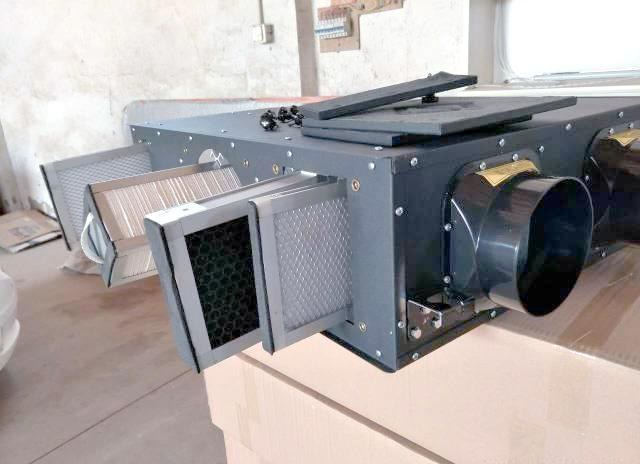
The complete unit: open the access panel and slide the filters out without dismantling the ceiling
Materials are the biggest part of the price difference and the easiest to bury under one sentence: “materials at 30 percent of the unit price”, with ducting, components, insulation and controls all inside it.
To check it properly, break it into three measures: ducting by the metre, stating material, wall thickness and insulation thickness; components by the piece, listing fire dampers, silencer plenums, flexible connectors, outlets and filter boxes one by one; controls by the point, with panels, CO2 sensors and interface modules counted.
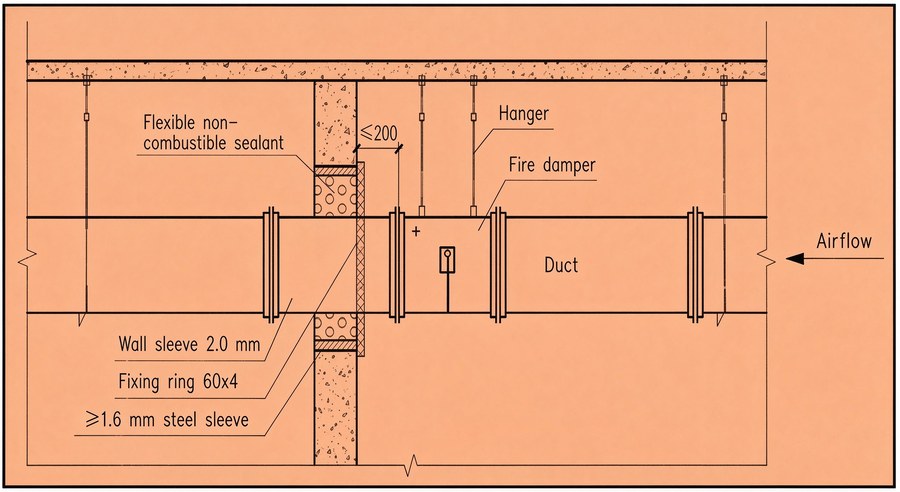
The item most often missing is the fire damper: one at every fire-compartment penetration. Countable on the drawings, they usually appear as two in the quotation. FHF series fire dampers close automatically at 280 °C flue-gas temperature, open on 24 V DC or by hand, and leak below 2 percent — that kind of component has to be counted by point, not bundled as “a number of”.
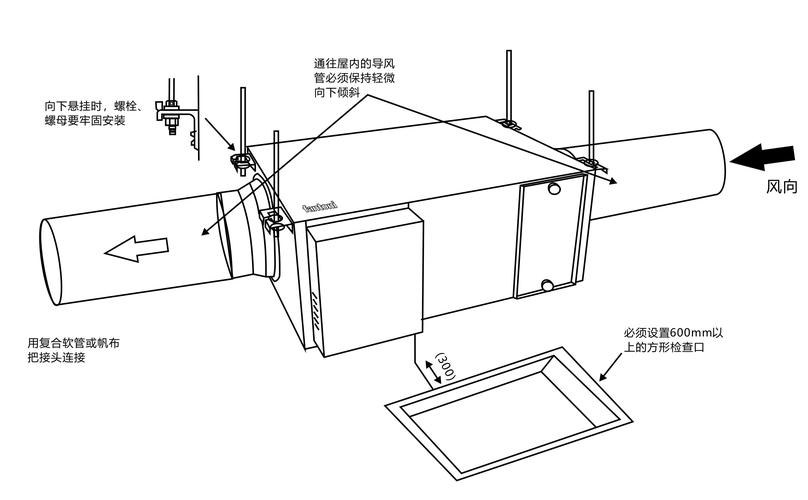
Hanging detail: threaded rods tightened, composite or canvas flexible connector, inspection opening not less than 600 mm
Installation is the vaguest account. Labour by the unit or by the point, whether lifting includes ceiling coordination, who cuts the openings and who makes good afterwards — all of it moves the total. Two ways of counting in the same building can differ by a third.
More important is commissioning. Airflow balancing is a separate operation: measure each unit, adjust the dampers, record the data, issue the report. Some quotations include commissioning inside the labour figure and then never do it, leaving terminal airflow all over the design at handover.
Documents cost money too. As-built drawings, equipment schedule, certificates and commissioning records — without them, acceptance stalls. Writing “as-built documents provided” in a quotation and actually producing them are two different things.
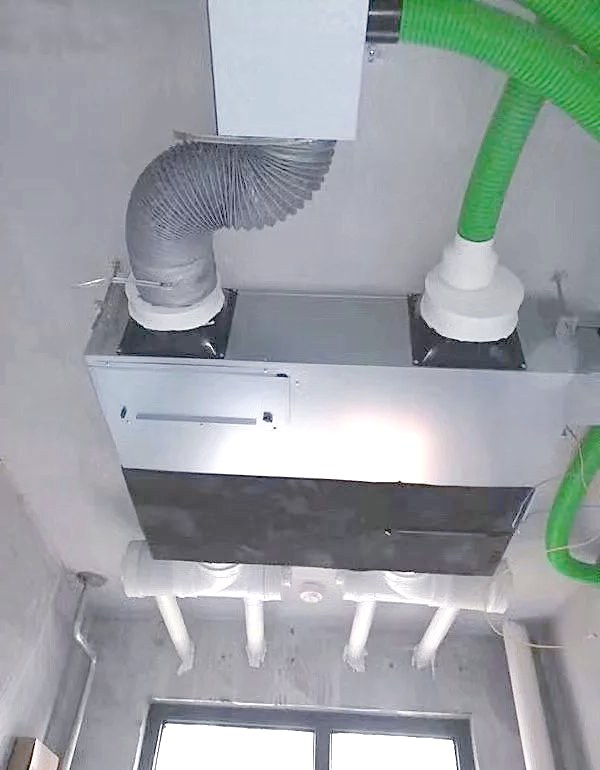
Site installation: unit on the insulated flexible connector, access panel directly below for filter changes
Lump sum. One number for all three parts: looks convenient, impossible to compare, and every change is charged item by item.
Materials by percentage. 30 or 40 percent sounds reasonable; on a project with long duct runs it never covers the work, materials are topped up midway and the quantity is whatever the contractor says.
Unit downgraded, difference recovered later. Quote one size down, then after award swap to the next size up on the grounds of insufficient airflow and charge the difference as a variation — dearer than quoting the right size at the start.
Unit model and external static pressure; heat recovery type and filter class; duct material, length and insulation thickness; fire dampers and silencers counted by point; whether installation includes lifting, commissioning and airflow balancing; and tax, freight and warranty term.
| Account | Measured by | What to check | Usual omission |
|---|---|---|---|
| Unit | By model and number | Airflow, external static pressure, heat recovery type, filter class, motor type | Airflow quoted, static pressure not; filter class vague |
| Materials | Duct by metre, components by piece, controls by point | Duct wall and insulation thickness; fire damper and silencer quantities | Materials as a percentage of the unit price; fire dampers listed as two |
| Installation | Labour by unit or point; commissioning and documents separate | Lifting and ceiling coordination included? Airflow balance included? Who issues documents? | Commissioning written into labour but never done; as-built documents promised and not delivered |
Align all six, then compare the total. Add one line to the contract: materials and components as per list, commissioning to include an airflow balance record.
That saying has been around for years, and on a quotation it is plain: unit prices are transparent, materials and installation are the variable. Split into three accounts, the client can follow it and the contractor can build it properly.
DeLENG makes fresh-air units and ventilation components in Dezhou, Shandong: units priced by model, materials counted by point against drawings, installation listed separately. Check the equipment schedule against the HRV range, and if the airflow is uncertain, estimate it with the fresh-air selection tool before talking price.
Why split a fresh-air quotation into unit, materials and installation?
Because the three are measured differently: units by model and number, materials by metre, piece and point, installation by labour and operation. In one lump sum the client cannot see where the difference comes from, and there is no basis for variations.
Is airflow enough on a unit line?
No. At the same airflow, external static pressure changes how much duct and terminal resistance the unit can serve; heat recovery type, filter class, motor type and access/filter arrangements all matter too.
Why not price materials as a percentage of the unit price?
Duct length and component points change with the drawings, so a percentage is unrelated to the actual quantity. On long duct runs it is always short, and the top-up quantity is decided by the contractor.
How are fire dampers counted?
By penetration through a fire compartment, one per penetration, counted point by point on the drawings. FHF series close at 280 °C, leak below 2 percent and need manual reset.
Is commissioning part of the installation price?
Airflow balancing is a separate operation: measure each unit, adjust dampers, issue a balance report. It should be a separate line, and acceptance should follow the report rather than the words “commissioning included”.
Related products and tools
Total heat exchange fresh-air ventilator XH-D800 to XH-D6000 — ten models, galvanised casing, multi-stage filters, access panel, custom builds to drawing.
FHF series fire damper — closes at 280 °C, 24 V DC or manual opening, sealing strip, leakage below 2 percent.
HRV range — selected by airflow band, units and materials quoted separately.
Fresh-air selection tool — estimate the required fresh-air volume from area and occupancy.